





Electric Scooter Rules in India (2026): License, Registration, Helmet, Age—Explained by Speed & Motor Power

If you want to buy an e-scooter in 2026, the quickest way to find out what paperwork you need is to look at the motor power (kW/W) and top speed (km/h). The most confusion about electric scooter rules in India in 2026 comes from mixing up low-speed models that don't need an RTO with motor vehicles.
1) The two groups that make all the decisions (2026)
India's central rules make an exception for some two-wheeled battery-powered vehicles under CMVR, which are often called "low-speed" EVs. A testing agency must check that the scooter meets all of these requirements in order to be eligible:
- Motor power for 30 minutes is less than 0.25 kW (250W)
- The maximum speed is less than 25 km/h.
- There are also safety and technical requirements, such as weight limits, brakes, and reflectors (as stated in CMVR).
If your scooter doesn't meet the exemption (higher speed or motor power), it's considered a motor vehicle and you have to follow the normal Motor Vehicles Act rules.
2) The rules for scooters going 25 km/h (and the mistake that happens a lot)
People often think, "25 km/h means no licence." Not all the time
The 25 km/h scooter rules only apply if the motor power is also exempt. If your model can only go 25 km/h but has a motor rated at more than 250W, it might still be considered a motor vehicle because the exemption checks motor power and speed (and other conditions), not just speed.
3) India's 250W scooter rules (what you need to check before you ride)
Don't just look at the marketing line for 250W scooter rules India and EV rules India for low-speed scooters. Check:
- The rated/30-minute power (not peak power)
- The top speed according to the spec/testing
- Whether the model has testing agency approval for the exemption conditions
People usually think of it as RTO-exempt (no RC/number plate, usually no DL), but you still have to follow traffic and safety rules.
4) e-scooter licence in India and the age limit for electric scooters India
DL rules apply if your scooter is a motor vehicle. According to the Motor Vehicles Act, the minimum age to drive a car in public is 18, but there is an exception for some low-capacity motorcycles at 16.
So, for an e-scooter licence in India and the age limit for electric scooters in India:
- Low-speed, exempt category → usually seen as not needing a DL
- Motor vehicle category: You need a driver's license and must follow age rules.
5) Rules for registering an e-scooter (RC, license plate, insurance)
If your scooter is a motor vehicle, you should expect the usual checklist:
- Number plate and registration (RC)
- Insurance
- Following the rules set by local law enforcement
If it's in the exempt low-speed category, it's usually not required to be registered. However, you should check the rules in your city or state, as some places are stricter about where these vehicles can be ridden.
6) The rule about wearing a helmet while riding an electric scooter and the fine for e-scooter traffic police
The Motor Vehicles Act says that motorcycles and scooters must wear helmets. The penalties can be different in each state or city. Delhi's published challan schedule, for instance, lists:
- Helmet violations (MVA 194D): ₹1000
- Driving without a licence (3/181): 5000
So, when people ask about e-scooter traffic police fines, the short answer is that the amount of the fine depends on the legal category of your scooter and when your city or state enforces the law.
7) Real-life examples from Hoverpro (quick clarity)
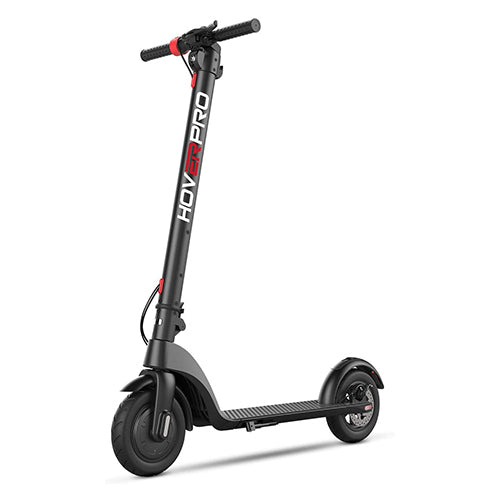
- The Hoverpro X1 has a 250W motor and a speed limit of 25 km/h, which is in line with the usual low-speed limits if the model meets all of the CMVR exemption conditions and testing authorisation.
- The Hoverpro X1 Pro has a 350W motor, but its speed is limited to 25 km/h. Motor power is over 250W, so it could be classified as a motor vehicle, which means it may need to be registered and licensed.
In 2026, don't just buy something that says "25 km/h." Buy by the law.