





How to Choose the Right Motor Power & Range for Your Route (Flat vs Flyover vs Ramp)

Buying an electric scooter is not just about top speed or the biggest battery on the spec sheet. The smarter question is this: what does your actual route look like every day? A scooter that feels perfect on flat colony roads may struggle on a long flyover, while a model that climbs confidently may be overkill for a short, smooth commute. That is why learning how to choose electric scooter motor power matters more than chasing the highest wattage. HoverPro’s own commute guide places 250W to 350W in the flatter urban-use bracket, while 350W to 500W is better suited to flyovers and heavier riders.
The second mistake buyers make is trusting the claimed range without thinking about terrain, rider weight, stop-go traffic, tire type, and riding style. Real-world range vs claimed range is rarely identical. Fleet guidance from Levy notes that actual range is often 20% to 30% lower than brochure numbers because of hills, heavier riders, aggressive acceleration, and battery aging.
Why your route matters more than the watt number alone
A scooter motor does not work in isolation. The same motor feels different depending on slope, rider weight, battery size, controller tuning, tires, and total vehicle mass. That means a 350W scooter with a better battery and urban-friendly setup can be a more practical daily commuter than a more powerful model built for rugged terrain. Battery capacity, motor efficiency, tire type, and vehicle weight all affect how far a scooter can really go.
This is also where the torque vs power electric scooter debate becomes important. In simple terms, torque is the pulling force you notice when starting, climbing, or carrying more load. Power helps the scooter maintain that performance as speed builds. For city riders, that means your scooter should not just move on paper; it should pull cleanly up a flyover without feeling strained.
250W vs 350W vs 500W scooter: which one fits your route?
250W: best for flatter, lighter, shorter commutes
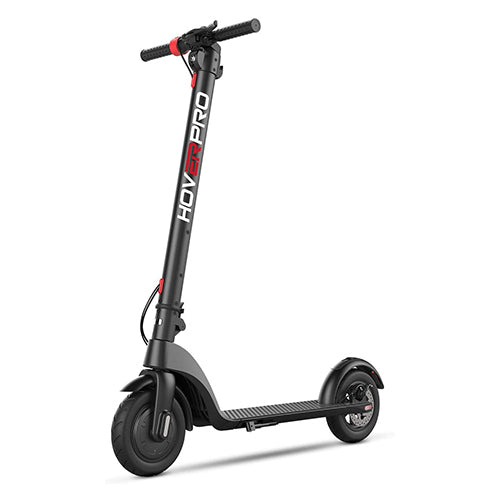
If your daily ride is mostly flat roads, smooth internal streets, short office runs, and minimal steep ramps, a 250W scooter is often enough. This is the right choice for lighter riders, shorter distances, and buyers who value portability, low running costs, and easy handling. HoverPro’s X1 is a good example of this category: it lists a 250W motor, about 20 km travel distance, up to 100 kg load capacity, and 20-degree gradability.
For many Indian riders, that makes a 250W scooter a sensible answer to “best e-scooter for daily commute” when the route is simple and predictable. But if your day includes even one long flyover, basement parking ramp, or frequent double-rider load, 250W can start feeling just adequate rather than comfortable.
350W: the sweet spot for mixed urban commuting
For most adult riders, 350W is the practical middle ground. It gives a better response during overtakes, more confidence on inclines, and less strain when the scooter is carrying a heavier rider or backpack. HoverPro’s X1 Pro steps up to a 350W motor, a 30 to 40 km stated range, 110 kg max load, 10-inch tires, and 20-degree gradability, making it a stronger everyday option for mixed city routes.
If you are comparing 250W vs 350W vs 500W scooter options for office travel, college runs, or daily city use, 350W is usually the safest recommendation for riders who want one scooter to do everything reasonably well. It is especially suitable when your commute includes mild inclines, patchy roads, flyover entries, or a higher rider weight. HoverPro’s own buying guide explicitly places 350W to 500W in the better zone for flyovers and heavier riders.
500W and above: better for frequent inclines, ramps, and tougher routes
If your daily route includes repeated flyovers, steep parking ramps, broken roads, heavier rider weight, or you simply want a stronger hill response, 500W and above makes more sense. This is the zone where “motor power for flyover climbing” becomes a real buying priority, not a nice-to-have. HoverPro’s rugged Q9 Max goes well beyond that at 1000W, with a stated 20 to 30 km range that explicitly depends on load and terrain, plus 120 kg load capacity and off-road tires.
That last point is important: a bigger motor does not automatically mean longer range. The Q9 Max is built for stronger acceleration, slopes, and rougher use, while the X1 Pro is tuned more as an urban commuter. So when buyers ask for the best scooter for inclines in India, the answer is usually not “the scooter with the longest brochure range.” It is the scooter with the right balance of motor strength, tire setup, battery, and route suitability.
Flat road vs. flyover vs. ramp: what should you buy?
If your commute is mostly flat and under about 10 to 12 km per day, a 250W scooter is usually sufficient, especially for lighter riders and smoother roads. If you ride across one or two flyovers daily, or your route mixes flat stretches with moderate inclines, 350W is the safer and more comfortable choice. If you regularly tackle steep ramps, heavier loads, or rougher city surfaces, 500W and above is the better long-term buy. HoverPro’s own guidance broadly supports that progression from 250W to 350W for flat routes and 350W to 500W for flyovers and heavier loads.
A practical electric scooter range estimator
Expected real-world range = claimed range × route factor × rider factor
Use this quick rule of thumb:
- Flat roads, steady riding: multiply claimed range by 0.8 to 0.9
- Mixed city route with flyovers: multiply by 0.65 to 0.8
- Frequent ramps, slopes, rough roads, aggressive riding: multiply by 0.5 to 0.7
- If rider weight is above roughly 85 to 90 kg, reduce the result a little further
This is not a lab formula. It is a buying shortcut based on the very real gap between ideal-condition claims and actual use. Since real-world usage is often 20% to 30% below the claimed range, route type and rider weight should always be built into your estimate before you buy.
For example, if a scooter claims 30 km and your route includes a daily flyover plus stop-go traffic, expecting around 20 to 24 km is far more realistic than assuming you will always get the full number. That mindset helps you avoid under-buying.
Rider weight effect on range: why it matters more than many buyers think
The rider weight effect on range is real because the motor has to work harder during starts, climbs, and repeated acceleration. More weight also makes inclines feel steeper and increases battery drain in traffic. This is one reason HoverPro’s guidance moves buyers toward 350W to 500W for heavier riders and flyovers, while independent fleet guidance also flags heavier riders as one of the reasons actual range drops below brochure numbers.
A heavier rider does not always need a very high-powered scooter. But they do benefit from more motor headroom. If you are near the upper end of the scooter’s load limit, or you carry a laptop bag, groceries, or gear every day, buying the next motor class up usually results in a calmer, more durable, and more comfortable commute.
So, what is the best e-scooter for daily commutes?
The best e-scooter for a daily commute is the one that matches your route, honestly.
If you ride mostly flat roads and want an affordable urban option, a 250W class scooter like the HoverPro X1 makes sense. If you want the best all-rounder for Indian city use, especially when your route mixes flats with flyovers, the 350W HoverPro X1 Pro is the smarter pick. If your focus is stronger climbing ability, rough roads, or frequent inclines, move into the 500W-plus category and look at performance-oriented options instead of basic commuter models. HoverPro’s current line-up reflects exactly that spread: X1 at 250W, X1 Pro at 350W, and Q9 Max at 1000W for more demanding use cases.
Final takeaway
When deciding how to choose electric scooter motor power, do not buy for the one day you want to show off speed. Buy it for the 300 days a year you will use the scooter on the same roads. Flat roads reward lighter, simpler scooters. Flyovers need more motor confidence. Ramps and heavy riders need more reserve. And range should always be judged by real conditions, not brochure optimism. If you match the scooter to your route instead of the marketing headline, you will end up with a safer, smoother, and more satisfying ride every day.